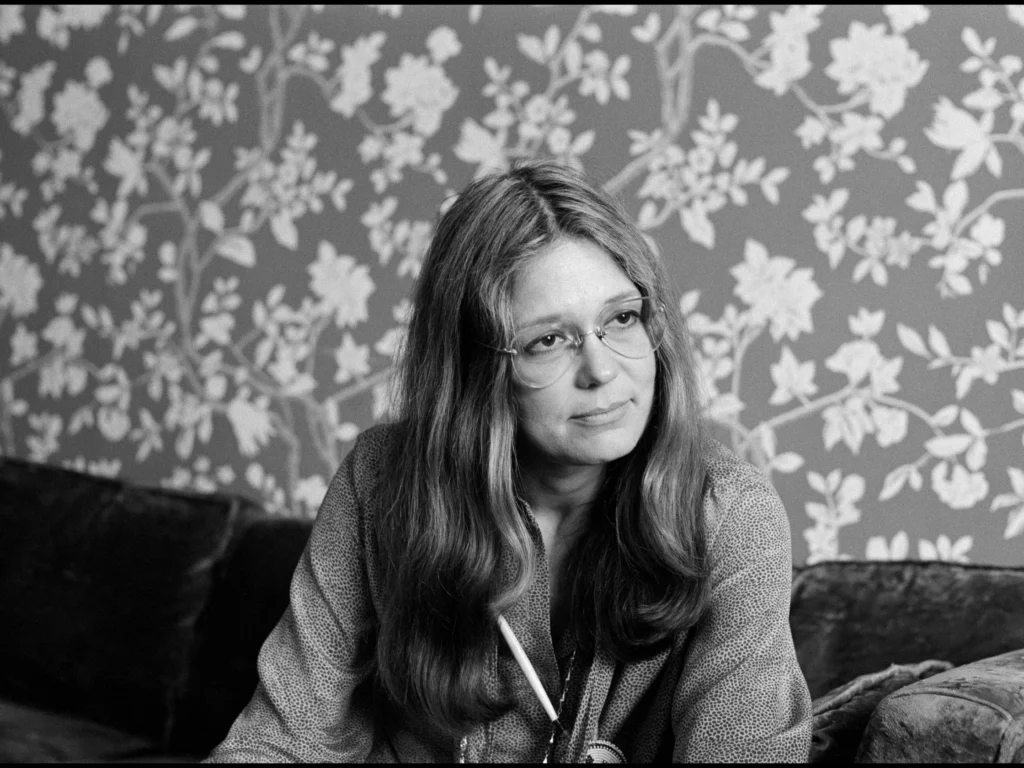
Though I’m past the age of average life expectancy, I don’t think about mortality much; just enough to make sure that the rooms and books I love will be well-used after I am gone.
I’m not sure there is an afterlife, at least one that is longer than the memories of those who love us. I didn’t grow up with a religious idea of heaven or hell. It seems motive enough to be fully alive in the present, and to leave positive memories behind.
I don’t have the regrets that are sometimes assumed. For instance, I’ve been asked if I regret not having children, especially since I grew up in the post-war 1950s when women were expected to make up for wartime losses. The answer is no, because I feel we are all related. I don’t mean to make this sound easy. Aside from happy love affairs that usually turn into friendships, there might seem from the outside to be too little family in my life. But actually, there is a loving and satisfying feeling in shared experiences and shared goals.

Of course, I do have regrets. For one, I spent way too much time doing what was expected of me, and not enough doing what I loved. I wish I had spent more time writing. Writing has always been the one thing that when I am doing it, there is nothing else I want to be doing. I still have many books in me.
Given my generation, I also grew up assuming that I would have to marry my identity, not become it. This scary idea caused me to put off marriage, and to live a temporary life. Not until my forties did I begin to see that a different kind of life was possible, one where I wasn’t bound to fulfill my husband’s dreams and depend on him financially. I learned that the work I loved could also create the future I wanted.
The lesson I’ve absorbed from my work is that we all learn from diversity, not from sameness. To be with people of different ages, races, and experiences is a gift.
The very young and the very old understand each other the best because we are the closest to the unknown.
The first half of my life, I spent being the youngest in any group. Then I gradually transitioned into the oldest. Now, my jeans are much older than many people I work with, and I’ve learned a lot from both ends of the age spectrum, including the fact that age can’t always be measured in years. Each part of life has unique value. No matter my own age, I have found that spending time across age groups always sparks learning, when the young and old learn equally from each other, not as mentors and mentees but as equals who each offer unique value.
Age can be as much a distortion as gender, race, class, culture, or any other generalization. Some people are already the essence of themselves as children, and many others don’t get there until fifty or beyond. That last might be especially true for female human beings who may be more encouraged to have derived an identity based on our role as marital partner or parent.
As many Native American cultures say, the very young and the very old understand each other the best because we are the closest to the unknown. But young and old female bodies share another similarity: they are not yet or no more focused on what’s needed to produce another human being and thus are able to give birth to ourselves. Perhaps this is why, in my experience, many women become their unique selves before they are teenagers or after our child-rearing lives are over. In these times, the “feminine” role is at its weakest.
We assume that wisdom comes with age, but now we have some science to prove it. In fact, the brain after fifty years begins to grow new synapses in much the same way as it did when we were teenagers. We see the world as more connected and interdependent as we grow older. It does not mean that accuracy is the only property of experience, or that the aging are always the instructors of the youthful. Elders are living, breathing, all-five-senses textbooks that can rocket us into the future with a speed and reach and wisdom we could never otherwise discover.
From the book An Unexpected Life by Gloria Steinem. Copyright © 2026 by Gloria Steinem. Published by Random House, an imprint and division of Penguin Random House LLC.